You may have heard about the recent Volkswagen scandal involving a cheat to pass emissions tests in VW diesel vehicles.
I’d like to get your opinions about this event, so I’ve added a questionnaire to my survey app called “(sample) size matters.”

If you would like to participate in the study (as well as other studies that you’ll find in the app), simply download the app on iOS or Android and share your opinions.


Irrationally Yours,
Dan Ariely
 Tweet
Tweet  Like
Like The day has finally come!
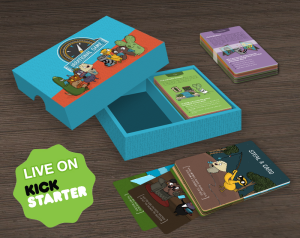
We’ve just launched the Irrational Game Kickstarter campaign, which means you can now get the game and some other rewards here.
The Irrational Game – We hope it will be a thought provoking, engaging and fun way to incorporate social sciences and human behavior into a challenging and strategic game.
It should also give you a way to reflect on your behavior and what you might want to change
If you consider supporting the project, please do it on the first day. A first day boost will give us great momentum for the entire campaign!
Thank you so much for all of your support. We can’t wait to get you the game.
Irrationally yours,
Dan
Here’s my Q&A column from the WSJ this week — and if you have any questions for me, you can tweet them to @danariely with the hashtag #askariely, post a comment on my Ask Ariely Facebook page, or email them to AskAriely@wsj.com.
______________________________________________________
Dear Dan,
Recently, our babysitter asked to borrow my car—then had a minor accident that cost about $1,000 to fix. Should I charge her for the repairs?
—Neta
You shouldn’t, for two reasons. To view this problem through a more general mindset, let’s assume that the culprit wasn’t your babysitter and that the object in question wasn’t your car—instead, let’s imagine you’d loaned your neighbor your electric drill and it broke while he hanging a picture. He might offer to pay for the drill, but if he didn’t, would you ask him to pay for it? Probably not. You’d understand that wear and tear happens, that the breakage probably wasn’t your neighbor’s fault and that the drill would have broken anyway. In contrast, when someone has a car accident, we’re quick to blame them—but from time to time, accidents just happen through no fault of the driver’s. Maybe this is a good opportunity to accept the accident as part of wear and tear on the car.
Another reason why you shouldn’t ask the babysitter to pay: They’re your babysitter, and while they might be a very trustworthy teenager, you were the one who decided to lend them your car. Best to own up to that responsibility.
______________________________________________________
Dear Dan,
I’m planning to hire a professional clothing stylist to study my body type and style and advise me on which clothes to keep and which to give away. I’m considering two options: first, asking her to take all the clothes she doesn’t approve of out of my closet, and second, to first take everything out and then put back the things she thinks pass muster. Which approach would you recommend?
—Maria
You’re right to suspect that the two methods will probably result in different outcomes. The reason is the “status quo bias”—the tendency to leave things as they are. If you start with all the clothes in the closet, the effort required to keep items there is lower than the effort required to take them out, which means that fewer clothes will end up being given away. On the other hand, if you start with all your clothes out of the closet, the lower-effort course involves leaving clothes where they are, which means more things will end up being given away.
But you’re unlikely to apply the status quo bias evenly to your whole wardrobe: The clothes that are clearly great will probably stay with you regardless of your method, and the clothes that are just awful will probably be given away either way too. The difference will come from the “Goldilocks clothes”—the ones that rest somewhere between those two clear categories. The real question is how many of these Goldilocks clothes you want to keep.
Two more points: If you don’t fully trust the stylist, you might start with the “all clothes in” approach, take fewer risks and keep more of the Goldilocks clothes. Also, some clothes will have sentimental value even if someone else thinks they look awful on you – so keep these. After all, we dress for ourselves, not just for other people.
______________________________________________________
Dear Dan,
What is the best example of human irrationality?
—Bill
I must admit I’ve never understood why the most important medical center in the world, the Mayo Clinic, is conveniently located in balmy Rochester, Minn. I’ve benefited enormously from their care—but it’s a long trip.
See the original article in the Wall Street Journal here.
Here’s my Q&A column from the WSJ this week — and if you have any questions for me, you can tweet them to @danariely with the hashtag #askariely, post a comment on my Ask Ariely Facebook page, or email them to AskAriely@wsj.com.
______________________________________________________
Dear Dan,
My boyfriend and I recently broke up, and the anguish and depression have been hard to bear. How can I cope with the feeling that my life has come to a halt?
—Inbal
In general, when we experience a strong emotion—whether it is anger, joy or grief—we tend to believe that it will stay with us for a very long time. In fact, time dulls the sensation far faster than we expect. The end of a relationship can be a terribly difficult life event, but studies show that people expect the pain of a broken heart to last much longer than it actually does.
One way to make things easier on yourself, while the agony subsides, is to change as many of your life patterns as possible so that you don’t constantly run into painful reminders of your ex.
Go to different restaurants and meet new people. If you can, take a trip to a place you’ve never visited before.
Breakups are one of the great universal human experiences. I wish that I had a simple silver-bullet solution for the pain they cause, but I don’t.
Personally, I think that enduring a difficult separation is an experience that we can learn from—and a way to increase our chances for doing better the next time around.
Maybe it would help to look at the pain as a byproduct of learning.
______________________________________________________
Dear Dan,
People today are far more aware of the dangers of obesity—we even hear about a public war on it. But we keep eating and eating. I certainly do, and I don’t know how to change. What’s our problem?
—Dror
We aren’t focusing on the right things. We’re fighting the obesity epidemic by providing people with education and nutritional information—based on the assumption that knowledge will encourage us to make better decisions. But that’s not how people behave.
In an experiment led by my former Duke University colleague Janet Schwartz, our team went to a Chinese fast-food restaurant to try to see what effect providing nutritional information and calorie counts would have on diners. Some days, we placed that information next to each dish; other days we hid it.
The effect? Nothing. The knowledge that some dishes were much less healthy than others made no difference whatsoever on customers.
The British chef Jamie Oliver recently made a similar point. He showed children all the gross bird parts used to make their beloved chicken nuggets—bones, tendons, skin and worse—then ground the disgusting mix into a paste and fried it in breadcrumbs. When he took the nuggets out of the pan, the kids still all wanted to eat them.
If we forget what we’re eating so quickly, what hope does health education have?
The upshot, I’d argue, is that if we want to change eating behavior, we need to ditch the failed educational approach.
For example, instead of allowing people to buy a 64 oz. soda while providing them with calorie information that we hope will make them decide on a healthier option, why not simply limit the size from the start?
______________________________________________________
Dear Dan,
Volkswagen recently admitted to cheating on emissions tests in its diesel-powered cars. What’s your take?
—Maya
As the owner of a VW Golf myself (not diesel), I’m deeply offended by the company’s emissions fixing, and I haven’t been able to look at my car in the same way since. Time will tell whether we can patch up our relationship.
See the original article in the Wall Street Journal here.
Here’s my Q&A column from the WSJ this week — and if you have any questions for me, you can tweet them to @danariely with the hashtag #askariely, post a comment on my Ask Ariely Facebook page, or email them to AskAriely@wsj.com.
______________________________________________________
Dear Dan,
I recently saw an episode of “How I Met Your Mother” in which one of the characters says, “Nothing good ever happens after 2 a.m.” I totally agree. But why? Does the dark make us misbehave, or is it something else? How can we stay safe and responsible in the wee hours?
—Aaron
You’re probably right that bad things are more likely to happen after 2 a.m. During the day, we face many temptations, and we overpower them with self-control.
But that control is like a muscle, and it gets tired from repeated use—not physical exhaustion but a mental fatigue that comes from making responsible, restrained choices over and over.
So when night falls, we can simply be too tired to keep being good and restrained—leaving us ready to fail.
______________________________________________________
Dear Dan,
I’m a high-school science teacher and a dean. We’ve had to discipline a number of students for cheating or plagiarism. Under our “two strikes and you’re out” policy, this puts them on the verge of getting kicked out of school after one infraction. The students were remorseful and confident that they would never again find themselves ripping off documents or copying papers—but then many of them cheated again. How can we better equip them to avoid such pitfalls?
—Morgan
It turns out that the fear of being caught doesn’t do much to deter crime in general. Even states that have the death penalty don’t report any noticeable difference in crime rates compared with those that don’t, according to a 2012 report by the National Research Council of the National Academies.
California’s “three strikes and you’re out” law was designed to take repeat criminals off the streets and deter offenders from repeated crimes. The theory was that if you knew that a third strike carried an especially harsh penalty, you would be deterred from further crimes.
But “three strikes and you’re out” didn’t seem to have a big effect on crime rates, according to a March 2000 study by James Austin and colleagues. And if “three strikes” didn’t work for crime, it’s unlikely to work for academic misdeeds.
We need to look for more effective approaches. Ultimately, what often stops us isn’t the fear of punishment but our own sense of right and wrong.
So you need to develop your students’ moral compasses. Maybe you should spend as much time on ethics as you do on math and history. After all, when they leave school, they’ll start applying their morals (whatever they are) to the world we share.
______________________________________________________
Dear Dan,
On a recent business trip to San Francisco, I showed up early for a meeting, so I went to wait in a coffee shop. A cup of coffee was $8, and it was full of young people. Don’t they have anything better to do with their money? Don’t they have jobs? Don’t they find it morally reprehensible to spend more than the hourly minimum wage on a cup of coffee?
—Maria
I feel the same way. Still, it is all relative: If the liquid in question was wine, at just $8 a glass, we might not feel so offended. Maybe we need to be a bit less prejudiced against coffee.
See the original article in the Wall Street Journal here.
Do you manage at least a portion of your own investments? If so, we have a survey studying investor behavior and could use your help. The survey contains questions about financial decision-making that’s part of a research study at Duke University. Please open the link below in a new window to take the survey. The survey should take you about 30 minutes. We would appreciate your full attention and careful consideration of each question. Participation is voluntary and your answers will remain anonymous. Thanks for participating!
You can access the survey here: https://new.az1.qualtrics.com/SE/?SID=SV_0oJot9TrgO8oqRn
Here’s my Q&A column from the WSJ this week — and if you have any questions for me, you can tweet them to @danariely with the hashtag #askariely, post a comment on my Ask Ariely Facebook page, or email them to AskAriely@wsj.com.
______________________________________________________
Dear Dan,
Is it smart to fire someone for failing? We often hear about politicians, generals and executives who blow it and then lose their jobs, but how can anyone gain experience if failure means their dismissal?
—Danny
This problem is worse than you might think. Organizations that don’t tolerate failure not only stop their employees from learning from their mistakes but also create a risk-averse culture that fears trying anything new. A related problem is that organizations generally reward (and punish) people based on the outcomes of their decisions, not on the quality of their decisions. In general, you’d hope that good decisions would lead to good outcomes, but that causal link rests on probabilities, not certainties—so reward and punishment are often misapplied. Imagine, for example, the manager of a chain of seafood restaurants who invested in five new branches along the Gulf Coast—six months before the BP Deepwater Horizon oil spill. The chain lost money, its share value plummeted, and the manager got sacked. But should he have been? What if the manager had meticulously analyzed the market and made the best decision given the information available at the time? Should the company have punished him—or rewarded him for making a sensible, thorough decision? Obviously, we should reward and retain people who know how to make good decisions, but most of the time, we just reward good outcomes. As long as organizations behave this way, we will be stuck with conservative, risk-avoiding behavior, and we will keep firing some of the wrong people.
______________________________________________________
Dear Dan,
My son wants a Nerf football. I found a real bargain online—just $2.50 on Amazon, but with a $7.50 shipping charge. The combined price of $10 is a really good deal, but paying three times as much for shipping as for the product itself seems like a rip-off. I know that what really matters is the total amount paid, but I somehow feel that the cost of delivery ought to matter too. Am I being irrational?
—Fay
This is exactly why Amazon introduced Amazon Prime back in 2005. For only $99 a year, you get “free” shipping on your orders. Of course, the shipping isn’t really free, but it gives you the feeling that you aren’t paying for it. One other clever aspect of Amazon Prime is that once you have paid for it, every additional purchase on Amazon further amortizes your investment, thereby helping you further justify your initial decision.
______________________________________________________
Dear Dan,
A friend of mine and her husband live in an apartment building, and their upstairs neighbors often have noisy sex between 3 and 8 a.m. My friend’s husband has no problem sleeping through the raucous romping, but my friend is being woken up every night. Should she let her neighbors know that their early morning love sessions aren’t as private as they might think (without embarrassing them or herself) so she can get her beauty sleep again?
—Kim
Maybe she could start with a compliment, explain the problem and offer a solution. How about, “I’m very impressed with your level of energy during the early hours of the day. How do you stay so passionate after so much time together? I’m a bit jealous. And by the way, we got a heavy carpet for the bedroom to help give us more privacy.”
See the original article in the Wall Street Journal here.
Here’s my Q&A column from the WSJ this week — and if you have any questions for me, you can tweet them to @danariely with the hashtag #askariely, post a comment on my Ask Ariely Facebook page, or email them to AskAriely@wsj.com.
______________________________________________________
Dear Dan,
I’m a single guy in my early 30s, and I often take potential romantic partners out for dinner. When the question of dessert comes up, I’m never sure what to do. To be polite, I always ask my date if she’s interested in dessert, and the answer is almost always no. I then feel bad about ordering dessert myself, so I turn it down as well. Is it impolite to have dessert even if my date has decided not to?
—Lev
It is most likely impolite not to order dessert. I’m basing that on two assumptions: first, that everyone enjoys at least a bit of dessert, and second, that your date may well be worried that, by ordering dessert, she would be signaling that she doesn’t care about her weight (which is a pity, of course, but it’s part of the reality of dating). With these assumptions in mind, I’d suggest that you ask her instead which dessert she loves most—and order one of those, with two spoons.
______________________________________________________
Dear Dan,
Lots of candidates are running for president. Some are proven liars, backstabbers or double-dealers; others are arrogant and self-important; still more break their promises. I wouldn’t want to hang around any of these people, but many Americans would vote for them. Don’t we care about honesty and trust?
—Daniel
Americans certainly care about trust—but in a slightly different way than you might think. We often care most about the trustworthiness of candidates’ faces.
Alex Todorov, a Princeton psychology professor, has done some wonderful experiments on this topic. In one, he showed some Princeton undergraduates pictures of people running for local office in Canada and asked them to rate the trustworthiness of the candidates. The Princeton students had never seen these people before and knew nothing about local elections in Canada.
Dr. Todorov then examined the number of elections won by the candidates in the photos and found that the students’ ratings of trustworthiness predicted more than 90% of the election results. It would appear that Canadian voters made basically the same judgment: They evaluated their politicians through simple, superficial judgments based on their faces.
We like to think we assess candidates based on their policies, experience, honesty and so on, but it doesn’t seem to be the case. Just a Canadian thing? I don’t think so. I suspect that even in important domains such as politics, we all make these sorts of rapid, emotional judgments. Maybe we need to go back and read what politicians are saying rather than just watch them perform on stage.
______________________________________________________
Dear Dan,
Can financial advisers, brokers and others in the financial industry truly follow their fiduciary responsibilities when they are paid on commission?
—Helene
If you’re asking whether they can act in their customers’ best interests and give objective advice, the answer is no. Even more depressing, it seems humanly impossible to be paid more for some outcomes than others—to get more money if the client invests in stock A rather than stock B—and avoid bias.
I’m not saying that financial advisers do this intentionally. We all do it when our interests motivate us to see the world in a particular way: We use our tremendous brainpower to convince ourselves that what is good for us is also objectively good.
That’s why we must eliminate (or at least reduce) conflicts of interests in the markets—and why you should always try to figure out whether your service providers have conflicts of interests. Luckily, in the U.S., we understand these pitfalls and don’t allow our politicians to be corrupted by special interests or money.
See the original article in the Wall Street Journal here.
Here’s my Q&A column from the WSJ this week — and if you have any questions for me, you can tweet them to @danariely with the hashtag #askariely, post a comment on my Ask Ariely Facebook page, or email them to AskAriely@wsj.com.
______________________________________________________
Dear Dan,
My girlfriend hates wearing contacts and has been talking about getting laser eye surgery ever since I’ve known her. But she’s never taken the first step of getting an evaluation. I had the surgery a few years ago, and it was like magic: One day I couldn’t see—and the next day I could. It took me about two years to get my act together, do the research and take off time for the procedure. How can I help my girlfriend to shorten this timeline?
—Phil
I’d suggest various forms of encouragement. For an incentive, offer to pay half the bill. To add a deadline, say that your offer to pay only holds if she has the procedure within the next two months. And to add social pressure to the mix, ask some of her friends to chip in for the effort but ask them to condition their gifts on the same two-month timeline. That should do it.
Of course, if you do this, you should expect that at some point she will set up some incentives for things that she wants you to do. Try to accept these cheerfully in the spirit of making your relationship more exciting and productive.
______________________________________________________
Dear Dan,
Last week, two different stories about senseless murders were all over the news. The first was about Cecil, Zimbabwe’s most famous lion, who was hunted down and killed as a trophy by a dentist from Minnesota. The second was about Samuel DuBose, an unarmed black motorist shot dead by a police officer in a routine traffic stop. Guess which story received more attention and outrage? Do we really care more about lions than people?
—Janet
Your question hinges on what we mean when we use the term caring. When you look at the volume of public outrage and the amount of ink spilled, it can sometimes seem that the loss of an endangered animal matters more. Sadly, that’s because, at least for some of us, the news of an animal’s death can have more emotional impact than the news of a person’s death.
Of course, this isn’t true for those who were close to the deceased, have personally experienced similar tragedies or have worked to fight similar injustices. But for those who experience such tragedies only via the news, the human loss sometimes doesn’t pull as much at their emotional strings.
This tendency has limits, though. If you gave most people two buttons, told them that pressing one would kill an endangered animal and pressing the other would kill a random fellow citizen, and ordered them to push one, very few would press the kill-a-person button. In this sort of direct comparison, I’d predict, almost everyone would prefer to kill the animal. Comparing lives more directly engages our cognition, not our emotions—and so the type of caring that emerges reflects our higher empathy for human beings and their families.
In other words, when we really think about it, we care more about humans—but we are often called to act based on our emotions, where our caring works quite differently.
______________________________________________________
Dear Dan,
How can I get my kids to eat more vegetables?
—Yael
How about trying a new version of Popeye the Sailor, who used to gulp down spinach at moments of crisis and instantly grow stronger? You could modernize the Popeye approach by changing the language at the dinner table and talking about passing the Iron Man (kale), the Green Lantern (peas), the Superman (tomatoes), the Penguin (Oreos) and the Joker (soda). (My pairing of characters and foods may reflect some of my parental biases.)
See the original article in the Wall Street Journal here.
In 1984, as a 17-year-old high-school student in Israel, I was a member of a youth movement that focused on study, civic work and preparation for military service. Our graduation ceremonies often featured big fires, intended to dramatize our patriotic fervor. That year, some of our leaders had brought back military supplies to help make the blaze especially intense.
One Friday afternoon, as we began putting away these materials, there was an accident. Nobody knows exactly what happened, but a spark must have been struck somewhere. A large magnesium flare—the kind that the Israeli military uses to light up a battlefield—exploded right next to me. In a moment, I was engulfed by flames.
The fire nearly killed me. About 70% of my body was covered in third-degree burns. In a matter of seconds, my life had changed irreversibly. Looking back now, more than three decades later, I realize that my awful new situation had one unexpected and positive effect: It began my career as a serious observer of the peculiarities of human behavior.
The explosion marked the start of a three-year period of hospitalization and surgeries—first in the emergency department of Beilinson Hospital, then in Tel Hashomer Hospital, both near Tel Aviv. I’ll never forget the day, perhaps four months after my injury, when I first saw myself in a full-length mirror. Before the accident, I had been a decent-looking teenager. But that day, I saw something completely different. My eyes were pulled severely to the side. The right side of my mouth and my nose were both charred and distorted. So was my right ear.
Was this really me? It was hard to see, believe or accept. Why was I still here? What would my future be, looking like this?
The burns and their treatment caused me extreme pain over a long period—a kind of pain that is more intense and lasting than almost any other medical condition. But since I had little else to do and badly needed distraction, I began to notice and record things.
For example, every day, I had to have a soaking bath that involved removing my bandages and scraping off my dead skin and flesh. The nurses would rip off the dressings all at once, without a break. It was excruciating, but the nurses insisted that tearing the bandages off was the best way.
One day, one of the nurses allowed me a bit of control over the process, and I found the treatment somewhat more tolerable. This made me wonder if having more control over the process would be better in general, but given my helpless position, I had little influence over the way I was treated.
After years of treatment, I left the hospital and went to Tel Aviv University. I decided to study psychology. My harrowing years had left me deeply interested in understanding how we experience pain and in the experimental method.
So I carried out laboratory experiments on myself, my friends and volunteers, using moderate (and safe) physical pain induced by heat, cold water, pressure and loud sounds—even the psychological pain of losing money in the stock market—to probe for answers. I learned that there are better and worse ways to deliver pain—and that my nurses’ methods hadn’t been the best ones. (One should remove the bandages slowly, not rip them off, and one should start from the most painful parts, then move toward the least.) If my nurses, despite all their experience with burn victims, had erred in treating the patients they cared so much about, other professionals might also be misunderstanding the consequences of their behaviors and make poor decisions.
Soon, I found, my personal and professional lives had become intertwined. For years, I felt the burden of my scars: the unending pain, the odd-looking medical braces, the pressure bandages that covered me from head to toe, the feeling of having gone through some kind of weird door and of living separately from the day-to-day experiences of my previous self and other “normal” people. I’d become an observer of my own life, as if I were watching an experiment on someone else—and I looked anew at other people as well.
This new approach became central to my work. Remembering the placebos given instead of medications during some treatments, I conducted experiments to explore the effects of expectations on painful treatments. (They can dramatically change our experiences—and even the intensity of the pain we feel.) Remembering how it felt to be given difficult information in the hospital, I tried to figure out how best to break bad news to patients. (Slowly, and in steps.) I kept finding topics that crossed the personal/professional boundary, and over time, I learned more about my own decisions and the behavior of those around me.
I saw people who managed their suffering and triumphed, and I saw others who caved in to fear and terror. I tried to take apart mundane daily activities—about why we shop, drive, volunteer, interact with co-workers, take risks, fight and behave thoughtlessly. And I couldn’t help noticing the intricate fibers that entwine our romantic life. (Fortunately, I never lost my sense of humor.)
All these questions began to weave their way into my research. I grew increasingly adept at observing how people went about their daily lives, prone to wonder about human habits, eager to explore the reasons for our behavior and motivated to find ways to make us behave slightly better.
My accident happened more than 30 years ago, and if any good came out of it, maybe it is this: I like to believe that the disaster and its aftereffects made me better able to understand myself and others. Maybe I’m rationalizing. We human beings do that exceptionally well: By trying to see something awful in a more positive light, we’re able to make sense of it, or at least make it more tolerable.
After years of writing scholarly papers on these topics, I started writing about my research and its implications in a more conversational, less academic way. And perhaps because I described how my research grew out of my own struggles, many people started sharing their personal challenges with me. With experience (warning: second rationalization coming), I got better at answering their questions. And I would like to believe that my advice was even helpful sometimes.
Don’t get me wrong: I don’t think that my injury was worth it. I have spent every day of my adult years in varying degrees of pain. I have endured, over and over, the dysfunction of the medical system. I have been exposed to an astonishing number of medical procedures and odd human interactions. I am more comfortable in public these days, but my scars still make me feel out of place in most social circumstances.
But—whether I’m rationalizing or not—I did learn important lessons from my injury, my time in the hospital, the years that followed, the research that emerged from my ordeal, and the questions and challenges that people have shared with me over the years. These have become my microscope on life.
My latest book, Irrationally Yours, which is based on my Wall Street Journal column “Ask Ariely,” was recently published by HarperCollins. See this article on the WSJ here.