A gentler and more logical economics
(this one is a bit long)
Neoclassical economics is built on very strong assumptions that, over time, have become “established facts.” Most famous among these are that all economic agents (consumers, companies, etc., are fully rational, and that the so-called invisible hand works to create market efficiency). To rational economists, these assumptions seem so basic, logical, and self-evident that they do not need any empirical scrutiny.
Building on these basic assumptions, rational economists make recommendations regarding the ideal way to design health insurance, retirement funds, and operating principles for financial institutions. This is, of course, the source of the basic belief in the wisdom of deregulation: if people always make the right decisions, and if the “invisible hand” and market forces always lead to efficiency, shouldn’t we just let go of any regulations and allow the financial markets to operate at their full potential?
On the other hand, scientists in fields ranging from chemistry to physics to psychology are trained to be suspicious of “established facts.” In these fields, assumptions and theories are tested empirically and repeatedly. In testing them, scientists have learned over and over that many ideas accepted as true can end up being wrong; this is the natural progression of science. Accordingly, nearly all scientists have a stronger belief in data than in their own theories. If empirical observation is incompatible with a model, the model must be trashed or amended, even if it is conceptually beautiful, logically appealing, or mathematically convenient.
Unfortunately, such healthy scientific skepticism and empiricism have not yet taken hold in rational economics, where initial assumptions about human nature have solidified into dogma. Blind faith in human rationality and the forces of the market would not be so bad if they were limited to a few university professors and the students taking their classes. The real problem, however, is that economists have been very successful in convincing the world, including politicians, businesspeople, and everyday Joes not only that economics has something important to say about how the world around us functions (which it does), but that economics is a sufficient explanation of everything around us (which it is not). In essence, the economic dogma is that once we take rational economics into account, nothing else is needed.
I believe that relying too heavily on our capacity for rationality when we design our policies and institutions, coupled with a belief in the completeness of economics, can lead us to expose ourselves to substantial risks.
Here’s one way of thinking about this. Imagine that you’re in charge of designing highways, and you plan them under the assumption that all people drive perfectly. What would such rational road designs look like? Certainly, there would be no paved margins on the side of the road. Why would we lay concrete and asphalt on a part of the road where no one is supposed to drive on? Second, we would not have cut lines on the side of the road that make a brrrrrr sound when you drive over them, because all people are expected to drive perfectly straight down the middle of the lane. We would also make the width of the lanes much closer to the width of the car, eliminate all speed limits, and fill traffic lanes to 100 percent of their capacity. There is no question that this would be a more rational way to build roads, but is this a system that you would like to drive in? Of course not.
When it comes to designing things in our physical world, we all understand how flawed we are and design the physical world around us accordingly. We realize that we can’t run very fast or far, so we invent cars and design public transportation. We understand our physical limitations, and we design steps, electric lights, heating, cooling, etc., to overcome these deficiencies. Sure, it would be nice to be able to run very fast, leap tall buildings in a single bound, see in the dark, and adjust to every temperature, but this is not how we are built. So we expend a lot of effort trying to take these limitations into account, and use technologies to overcome them.
What I find amazing is that when it comes to designing the mental and cognitive realm, we somehow assume that human beings are without bounds. We cling to the idea that we are fully rational beings, and that, like mental Supermen, we can figure out anything. Why are we so readily willing to admit to our physical limitations but are unwilling to take our cognitive limitations into account? To start with, our physical limitations stare us in the face all the time; but our cognitive limitations are not as obvious. A second reason is that we have a desire to see ourselves as perfectly capable — an impossibility in the physical domain. And perhaps a final reason why we don’t see our cognitive limitations is that maybe we have all bought into standard economics a little too much.
Don’t misunderstand me, I value standard economics and I think it provides important and useful insights into human endeavors. But I also think that it is incomplete, and that accepting all economic principles on faith is ill-advised and even dangerous. If we’re going to try to understand human behavior and use this knowledge to design the world around us—including institutions such as taxes, education systems, and financial markets—we need to use additional tools and other disciplines, including psychology, sociology, and philosophy. Rational economics is useful, but it offers just one type of input into our understanding of human behavior, and relying on it alone is unlikely to help us maximize our long-term welfare.
In the end, I do hope that the debate between standard and behavioral economics will not take the shape of an ideological battle. We would make little progress if the behavioral economists took the position that we have to throw standard economics—invisible hands, trickle-downs, and the rest of it—out with the bathwater. Likewise, it would be a shame if rational economists continue to ignore the accumulating data from research into human behavior and decision making. Instead, I think that we need to approach the big questions of society (such as how to create better educational systems, how to design tax systems, how to model retirement and health-care systems, and how to build a more robust stock market) with the dispassion of science; we should explore different hypotheses and possible mechanisms and submit them to rigorous empirical testing.
For instance, in my ideal world, before implementing any public policy—such as No Child Left Behind or a $130 billion tax rebate or a $700 billion bailout for Wall Street—we would first get a panel of experts from different fields to propose their best educated guess as to what approach would achieve the policy’s objectives. Next, instead of implementing the idea proposed by the most vocal or prestigious person in this group, we would conduct a pilot study of the different ideas. Maybe we could take a small state like Rhode Island (or other places interested in participating in such programs) and try a few different approaches for a year or two to see which one works best; we could then confidently adopt the best plan on a large scale. As in all experiments, the volunteering municipalities would end up with some conditions providing worse outcomes than others, but on the plus side there would also be those who would achieve better outcomes, and of course the real benefit of these experiments would be the long-term adoption of better programs for the whole country.
I realize that this is not an elegant solution because conducting rigorous experiments in public policy, in business, or even in our personal lives is not simple, nor will it provide simple answers to all of our problems. But given the complexity of life and the speed at which our world is changing, I don’t see any other way to truly learn the best ways to improve our human lot.
 Tweet
Tweet  Like
Like Rethinking Money for the New Year
In today’s economy, consumers and financial institutions alike are constantly on the lookout for new ways to reduce spending. As you read this article, consider these questions: what cost-cutting habits has your organization developed, and are they rational? Do you recognize irrational or habitual spending tendencies in your own customers and members? If so, how can you help them make better decisions that lead to improved savings?
Money is an integral part of modern life. We constantly make decisions about whether we’re willing to pay for different products and, if so, how much we are willing to pay. In fact, we make decisions about money so often that we consider money to be a natural part of our environment.
However, money is a relatively recent invention, and despite its incredible economic usefulness it does come with its own set of problems. In particular, it turns out that decisions about money are often unintuitive and, in fact, quite difficult. Consider the following situation as an example: you are thirsty, tired, and annoyed and just want a cup of coffee. You see two coffee shops across the street from each other. One is a specialty coffee shop that sells handcrafted, designer coffee and the other is Dunkin’ Donuts, which sells standard, decent coffee. The price difference between the two options is $1.75 for your cup-a-joe. Now, how do you decide if the benefit of the handcrafted coffee drink is worth the additional $1.75?
What you should do (if you wanted to be rational about it) is consider all of the things that you could buy with that $1.75, now as well as in the future, and decide to buy the expensive coffee only if the difference between the two coffees is more valuable than all of those other possibilities.
But of course this computation would take hours, it is incredibly complex, and who even knows all the possible options to consider?
Heuristically Speaking
So what do we do when we need to make decisions but making them “correctly” is too time-consuming and difficult? We adopt simplifying rules, which academics call heuristics, and these heuristics provide us with actionable outcomes that might not be ideal but that help us to reach a decision. One of the heuristics we often use is to look at our own past behaviors, and if we find evidence of relevant past decisions, we simply repeat those.
In the case of coffee, for example, you might search your memory for other instances in which you visited regular or fancy coffee shops. Then you might assess which behavior is more frequent, and tell yourself, “If I’ve done Action X more than Action Y in the past, this must mean that I prefer Action X to Action Y” and as a consequence, you make your decision.
The strategy of looking at our past behaviors and repeating them might seem at first glance to be very reasonable. However, it suffers from at least two potential problems. First, it can turn a few mediocre decisions into a long-term habit. For example, after we have gone to a fancy coffee shop three times in a row and paid a premium for the same coffee we could get elsewhere, we might continue with this strategy for a long time without reconsidering how much we are really willing to pay for coffee.
The second downfall is that when market conditions change, we are unlikely to revise our strategy. For example, if the price difference between the regular and fancy coffee used to be $0.25 and over the years has increased to $1.75, we might stay with our original decision even though the conditions that supported it are no longer applicable.
Examine old habits
In light of our current financial situation, many people these days are looking for places to cut financial spending. Once we understand how we use habits as a way to simplify our financial decision making, we can also look more effectively into ways to save money.
If we assume that our past decisions have always been sensible and reasonable then we should not scrutinize our long-term habits. After all, if we’ve done something for five years, it must be a great decision. But if we understand that long-term, repeated behaviors might reflect our habitual decision making in the face of complex financial decisions more than they reflect what is truly best for us, we might first examine our old habits and carefully consider whether they indeed make sense or not. We can examine our subscription to the ESPN Sports Package, our annual subscription to the opera, our yearly Disneyland vacation, or our monthly visit to the hairstylist.
By examining these habits — and quitting them when it makes sense to do so — we might actually discover ways in which we could reduce our spending on a long-term basis.
Yes, money is complex, and it is incredibly difficult for us to carefully examine (and re-examine) every purchasing decision we make. But the advantage of examining our habits is that it might lead us to create better ones that will benefit us for a long time.
May you have a happy and exciting new year,
Dan
This column first appeared at http://www.deluxeknowledgeexchange.com
Black pearls
How do we decide how much we are willing to pay for things?
Let’s take black pearls as an example:
The interesting thing about black pearls is that when they were first introduced to the market there was essentially no way to gauge how much they were worth: were they worth more or less than white pearls? Most people instinctually believed that white pearls were still more desirable. But then the black pearl discoverers had an lucrative insight: take these unfamiliar black pearls to a famous jeweler and have them displayed next to the more precious gems: rubies, sapphires, and so on. The result still lives with us today: black pearls are now worth more than white pearls.
The Power of Free Tattoos
In many past experiments we have shown that people are often overly excited about things that are FREE (see Predictably Irrational). An interesting opportunity to further look at this behavior presented itself when a few weeks ago a nightclub in New York City promoted an event with “free tattoos,” and we just had to check it out to see if the offer would tempt people to get one…
A large open room in an old industrial building with three wooden picnic tables lined up end to end in the center of the room. The tattoo station was a small portable table, two folding chairs and a cheap floor lamp. Our research assistant, with her clipboard, was by far the cleanest and most official looking person around. And when she offered to help the tattoo artist by taking the names of the people in line, he was delighted. In the 5 hours she was there (from 9pm to 2am) a total of 76 people signed up for free tattoos.
Who are these people?
The line for free tattooed was composed of the same number of males and females. The age range was 18 (underage for the event) to 47, with an average of 26. As they were deciding to stand in line for the free tattoo we asked the participants how drunk they were at that point, and the average level of reported drunkenness was surprisingly low at 2.64 on a scale from 1-11 (however, it was later discovered that a better question to ask may have been “How intoxicated, drunk or high do you feel right now?”).
What were they getting?
Overall, the tattoos people wanted were very creative. Some notables were the phrase “Holy Snacks” on the inside bottom lip; one 27-year-old male wanted a Nintendo controller tattooed onto his left ribs; there was a request for a penis tattoo, and a few people wanted some version of infinity in English or in Swahili (Umilele). Another notable groups were the 4 individuals that did not know what they wanted, but knew that they wanted some free tattoo, and 5 individuals that did not know where they wanted it.
Was it the FREE?
When we asked the people in line for the free tattoos if they would get the tattoo if it were not free, 68% said they would not. They were only getting it because it was free. We also asked the participants if they knew that there were free tattoos being offered at the party. The 90% that knew they would be giving away free tattoos were asked two follow-up questions. First, when asked when they made their decision to get a tattoo that night before or after arriving at the party, 85% said they made their decision before arrival and 15% made the decision after arriving. When further asked, on a scale of 0-100, how likely did they think they were to get a tattoo that night, people were on average 65% sure they would be getting a tattoo.
As the research assistant was collecting the data, another tattoo artist (not the one that work working that evening, but a competitor) stopped by to tell give us her opinion about the free tattoo practice. This petite brunette, with a medallion tattoo on her lower sternum, felt it was her responsibility to tell us in gory detail about all the unhygienic and potentially health hazardous practices she had witnessed throughout the evening. She talked about how a contaminated paper towel had been passed around and how an obvious necessity missing from the set-up was any sort of disinfectant. She said all these practices could cause these people to contract a blood disease like Hepatitis, HIV, etc. Whether her concerns were valid or not, it became clear to us that the real cost of tattoos are not their price, but the odds for infections and long-term illness.
You decide:
The results indicate that the power of “free” is surprisingly influential. When we face a decision about a tattoo, one would hope that the long term permanency of the decision, coupled with the risks of getting different types of infections would cause people to pay little attention to price, and certainly not to be swayed one way or another by the power of free. But sadly, the reality (at list in the nightclub scene in New York) suggests that the power of free can get us to make many foolish decisions. So next time, when you are facing a decision about a “free” offer, my suggestion would be to imagine what you would do if the price was not free and instead it was very cheap (maybe $1) — and ask yourself if this would change your behavior. And if you would make a different decision if free was not involved, maybe this is a good sigh that the decision was not that good to start with?
New Economists worth knowing
Forbes magazine asked me a few weeks ago to list the “Seven Most Powerful New Economists.” I am not sure what the title exactly means, but here is my list (and here is the link to the list on the Forbes website):…
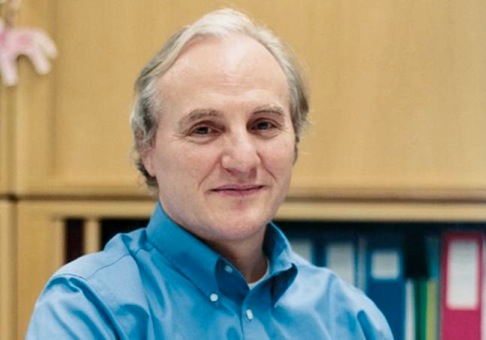
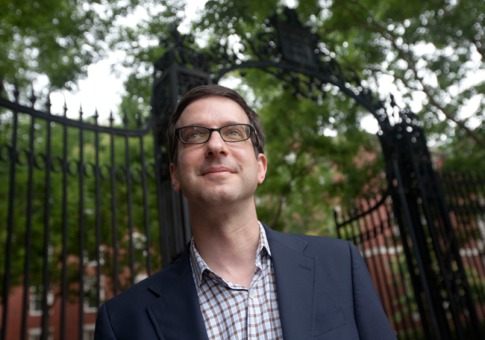
Many people have contributed over the years to Behavioral Economics–too many to mention here. The individuals on this list have not only changed the face of economics as we know it, but they are likely to contribute a great deal more in the years to come. Each of these individuals has tremendous creativity and insight that has enabled them to capture and explain our odd, complex, and sometimes irrational human nature. Armed with this new understanding of human behavior, and taking our human weaknesses into account, behavioral economics could help us take steps toward designing a better world. Esther Duflo, Abdul Latif Jameel Professor of Poverty Alleviation and Development Economics, MIT
Esther is one of the founders and the director of the Poverty Action Lab, and an inspiring researcher in a related field called development economics. Her efforts are directed at improving our understanding of the financial, and social incentives of the poor, and the limitations imposed on them by their environment. She carries out clever experiments, mostly in third-world countries, that try to tease apart the causes for much of human misery. In the process, she is proposing solutions that are effective and efficient.
George Loewenstein, The Herbert A. Simon Professor of Economics and Psychology, Carnegie Mellon University
George has a knack for being at the start of nearly every important trend in Behavioral Economics. Beside his role as one of the pioneers of the field, George was one of the founders of the allied field of neuroeconomics, among the first to test behavioral economic theories using field experiments, one of the first to explore the role of emotions in economic behavior, and is a leader in the increasingly popular application of behavioral economics to public policy. He is perhaps best known for his research on our inability to correctly predict what we would want in the future, and when we are under the influence of different emotional states.
Al Roth, The Gund Professor of Economics and Business Administration, Harvard University
Al is interested in how people behave in complex economic environments, and how those environments can be better designed to help people achieve better outcomes. One of the first such marketplaces that Al helped design is a system that “matches” new medical residences to their first hospital jobs. He also used the same general approach to set up markets that place students in NYC and in Boston public high schools, and most recently he was instrumental in designing the New England Program for Kidney Exchange.
Ernst Fehr, Professor of Economics, and Director of the Institute for Empirical Research in Economics, University of Zurich
Ernst has been a pioneer in exploring “social preferences,” which is the basic idea that we care about others. In addition to becoming an important idea in economics, social preferences are also an important building block in our understanding of the limitations of the standard rational model of selfish behavior. With many innovative experimental approaches, Ernst has firmly established the importance of social preferences in labor markets, credit markets, as well as in the internal organization of companies. He is also a major contributor to neuroscience and to the biological foundations of economic behavior.
David Laibson, Professor, Harvard University
David has made it his mission to understand why our best intentions are often inconsistent with our actions. He explores important puzzles such as: Why do we pay $1,000 for one-year gym membership and then never go? Why do we plan to lose weight, but fail to stick to our diet? Why do we set deadlines and break them? Why are exercise, good nutrition and saving things that we always think we will do tomorrow, but not today? In the process, he’s finding ways to enable people to commit themselves to courses of action that best reflect their long-run interests.
Uri Gneezy, Arthur Professor of Management and Strategy, University of California at San Diego
Uri is a non-conventional thinker who has repeatedly demonstrated the many ways rational economic theory crashes when it encounters data. His work focuses on the role of incentives, in particular the unexpected ways in which financial incentives, both large and small, can have detrimental effects. Among his findings: Giving people money for a certain behavior (relative to paying them nothing) can actually reduce the likelihood they will engage in this task, and that large incentives can actually hurt performance.
John List, Professor of Economics, University of Chicago
John carries out his field almost everywhere: in charities, schools, online, in businesses, and in markets as diverse as auto-repair shops and flea markets. In one recent field experiment in a high-tech Chinese manufacturing plant, John found that simply framing worker bonuses as losses rather than gains increased worker productivity by over 1%. While 1% might not seem too big, with compounding, this magnitude of difference can cause two countries that start out equal diverge over the years such that one looks like the U.S. and the other like Ethiopia.





Experiments? Not!
A few days ago we wrote the nice people at Whole Foods about some ideas for doing experiments together. These were going to be experiments on taste perception, willingness to pay, and on how we get people to eat healthier and enjoy more fruits and vegetables.
Here is the official response we got back:
Thanks so much for considering Whole Foods Market for this opportunity…. While the concept is quite interesting and the subject matter is aligned with our stores, we will unfortunately be passing on this opportunity at this time.
Thanks so much for considering us and please don’t hesitate in reaching out to us in the future.
Best regards,
Michael
What annoys me is the combination of “aligned with our stores” and “no.” And of course it is not just Whole Foods that is in this boat. Companies in general are willing to spend lots of money on consultants, they are willing to spend lots of money on gambling that their intuitions are correct, and sometimes they even pend money on focus groups. But, when it comes to testing things empirically, the typical answer is “interesting, but not for us.”
I suspect that the reason for the reluctance to engage in experiments is that no one (for example Michael from Whole Foods) wants to take any risks. Everyone just wants to do their job. Because of that companies continue to behave in the same way without taking any new interesting directions…. very sad.
Sorry about this post, but I had to vent somehow.
Looking for a massage …
Recent research (1) shows how physical contact can promote trust, even among complete strangers. Paul Zak, a neuroeconomist at Claremont Graduate University (together with Vera Morhenn, Jang Woo Park, and Elisabeth Piper), studies the links between levels of oxytocin (the “bonding” hormone) in relation to economic decision-making. In their study, they looked at participants’ responses in the Trust Game when they were (or were not) given massages. First, let’s take a look at how the classic Trust Game works between two players (who never meet):
- Player 1 gets some money ($10 in this case) and the option to send none, some, or all of it to Player 2, knowing that the money that is sent will be tripled on its way into Player 2’s hands. So, if Player 1 decides to send $4 to Player 2 (and keep $6), Player 2 will receive $12 ($4 x 3).
- Player 2 then has the option of sending none, some, or all of the money back.
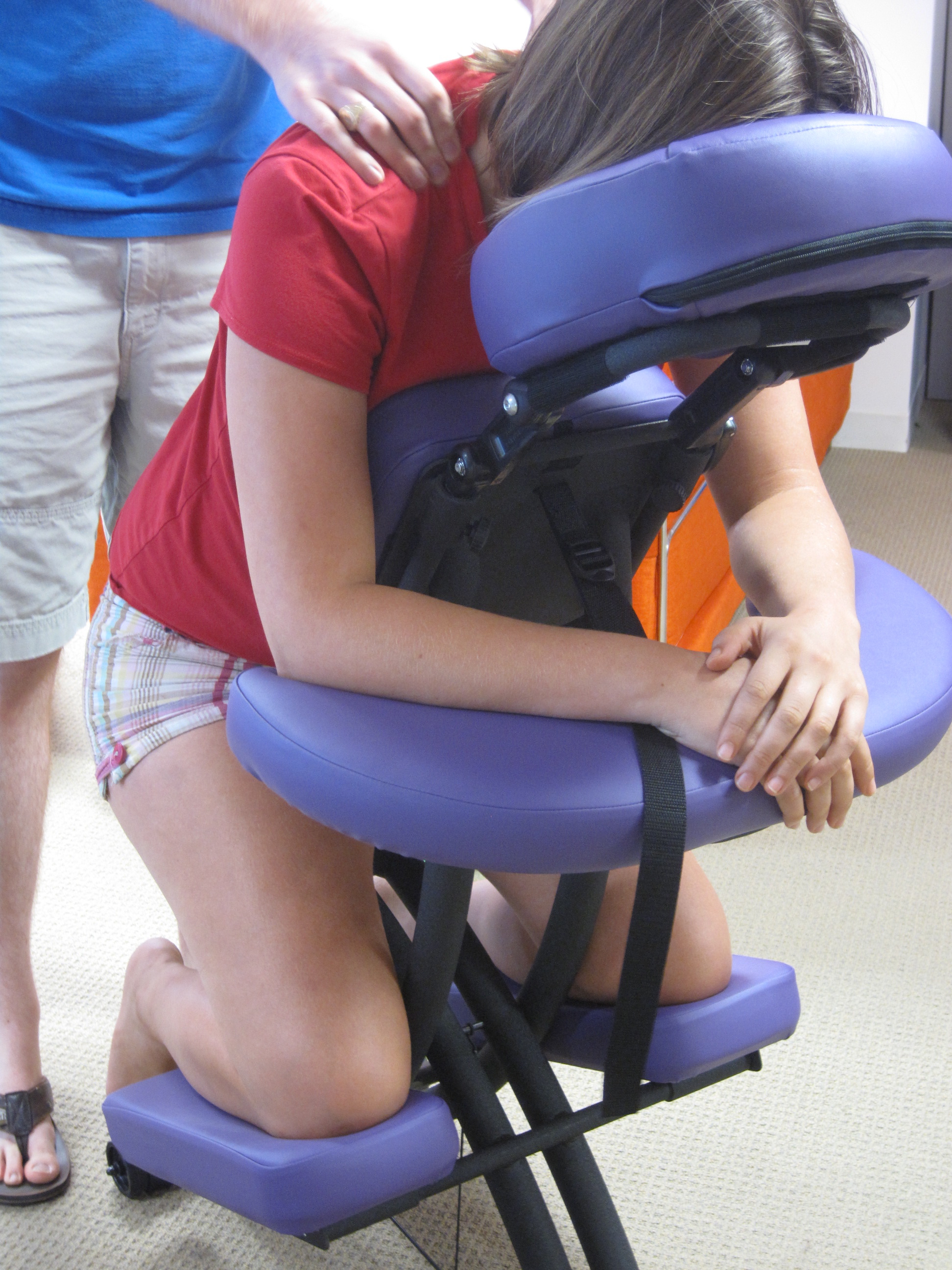
Paul and his collaborators found that a mere 15-minute massage increased the amount of oxytocin in the bloodstream, leading participants to be more trusting of their anonymous partners in the game. Those who were massaged (women, especially) were primed to be more empathetic and trusting, ultimately sacrificing more to achieve mutual benefit. When massaged, Player 1 sent more money and when massaged Player 2 gave more money back.
But it’s probably not just oxytocin guiding these trusting gamers. Another study from Cedars-Sinai Medical Center (2) showed that those who received a 45-minute Swedish massage (as compared to a light-touch control group) had decreased levels of the hormones cortisol (released during stress) and vasopressin (linked to aggression and cortisol release). Basically, the Swedish massage relaxed participants, decreasing their physiological stress response.
In addition, An experiment conducted by Jonathan Levav and Jennifer Argo (3) showed that participants who were physically touched by a female experimenter (on the shoulder or with a handshake) made riskier financial decisions like gambling or investing money. Why? The contact made them feel secure and safe from harm. Consequently, like their massaged counterparts, they were more willing to take risks for potentially greater gains.
Being physically touched, whether with a kneading massage or a comforting pat on the shoulder, seems to encourages cooperative behavior. While these decisions may benefit others more than ourselves (at least in terms of immediate monetary gain), they are not necessarily ill-advised. In fact, the decision-makers who gave money to an anonymous partner ultimately felt better about their choices.
With this in mind, we purchased a massage chair in the Center for Advanced Hindsight. Now, we are looking for volunteers to help us test what other benefits we can get from massage.
2: Mark H. Rapaport, Pamela Schettler & Catherine Bresee. “A Preliminary Study of the Effects of a Single Session of Swedish Massage on Hypothalamic–Pituitary–Adrenal and Immune Function in Normal Individuals”. The Journal Of Alternative And Complementary Medicine, 16 (1-10), 2010.
3: Psychological Science (2010), Jonathan Levav and Jennifer J. Argo, Physical Contact and Financial Risk Taking
Annoying dentist…
On October 5th I appeared on NPR, discussing some of the problems with dentistry.
This was not the first time that I have pointed to problems of conflicts of interests. In the past I have been vocal about conflicts of interests in Medicine and in Banking, but somehow this time I stuck a nerve and as a consequence I got lots of angry emails (see also the comments on NPR).
The basic email I got had the following form:
“Dan, you are an idiot. I am a dedicated dentist who only does what is in the best interest of my clients. But, it is true that there are a few bad apples in dentistry, as they are everywhere”
One of the responses came was from Ronald Tankersley, D.D.S. the President of the American Dental Association. Among other things Ronald Tankersley writes:
Ariely’s assertion that patients stay with their dentists because pain, discomfort and having to “keep your mouth open” causes cognitive dissonance is pure nonsense— he sounds like someone who hasn’t visited a dentist for decades. Modern pain and anxiety control techniques have all but eliminated the discomfort that older patients may have encountered as children. In fact, younger patients today don’t think of dental care as being uncomfortable at all, partly because they rarely get disease and partly because the treatment they do get is rarely uncomfortable.
Particular details of the comments aside, I would like to take this opportunity and clarify my position on the pay-for-service model that we commonly use in dentistry and its effects on conflicts of interests (dentists that get paid for X want to do X), and on the quality of care:
1) I don’t think that dentists are particularly evil, selfish, of greedy just that (much like the rest of us) when they face conflicts of interest they are likely to see the world in a distorted way. They are likely to look, and find, problems that the treatments for are ore lucrative. The same of course applies to bankers, MDs, financial advisors, expert witnesses, etc.
2) The evidence for conflicts of interests is rather staggering, and I suspect that the majority of dentists would agree with me that this is a problem that is hurting their clients and in the long-terms also their profession.
3) One of the hallmarks of conflicts of interests is that people don’t see themselves as being influenced by such forces (“I am always doing the right thing, other people succumb to conflicts of interests…”)
4) I am easily influenced by data, and I would read carefully any study or data that would add to my understanding of this problem – so if you have such data, please send it my way.
5) Rather than dismissing the problem completely, perhaps the American Dental Association should take this as an opportunity to study the standards of care and conflicts of interests in dentistry. On my part, I am willing to help in any way I can. I can help design studies, analyze data, propose ways to eliminate conflicts of interest and get patients to seek second opinion, etc.
It is easy to pretend that world of dentistry is working just fine, and that the error is entirely mine, but I suspect that this is not the right approach for patients, for dentists, or for the American Dental Association.
Irrationally yours
Dan Ariely
Taxes and fun?
April: That time of year when the weather is perfect and the mosquitoes have yet to emerge full swarm. When you can start to think about lying by the pool without fully having to come to terms with wearing a bathing suit in public….
…And yet it’s that time of year when the majority of the country will be gripped by stress as that fateful day moves ever closer – April 15th, tax day.
No one likes cutting a check to Uncle Sam, and the fact that the process of filling out the tax forms resembles a nightmarish (Choose-Your-Own-Adventure) story does nothing to improve matters. But as is often the case, the anticipation is arguably the worst part, and typically one dedicated night (in addition to a more substantial amount of time taken to organize) is sufficient to finish the paperwork. It’s just a matter of convincing yourself to sit down and do it.
But what if it wasn’t such a dreadful experience? Imagine how the tax experience would change if you had a way to alleviate the stress and maybe even enjoy some of the aspects of the task at hand…
Let’s say that your 1040 came with a little extra stuff: maybe a container with an alcohol content, or perchance something of the chocolate persuasion. What if your tax forms arrived in a gift box with some financial documents on the side? What if the instructions for filling out the form told you to type in your personal information and take a bite of chocolate, type in your W-2 information and drink some of the alcohol, add your deductions and try some of the nuts etc? What if we could live in a world where you actually looked forward filling out these forms?
What do you think? Would you be interested in doing something like this on this tax season?
If you don’t mind, click this link and let me know what you think about this idea.
Irrationally yours
Dan
Hitler and Nudge
We’ve seen numerous examples of how companies create an illusion of free choice when in fact they want us to choose one option over the other. The power of defaults takes advantage of our laziness and fear of making any changes when it comes to making complex, difficult, or big decisions.
Hitler seems to have had a few of these tricks up his sleeve as well, as seen here in this 1938 voting ballot:

Translation: “Referendum and Großdeutscher Reichstag; Ballot; Do you agree with the reunification of Austria with the German Reich that was enacted on 13 March 1938 and do you vote for the party of our leader; Adolf Hitler?; Yes; No”